
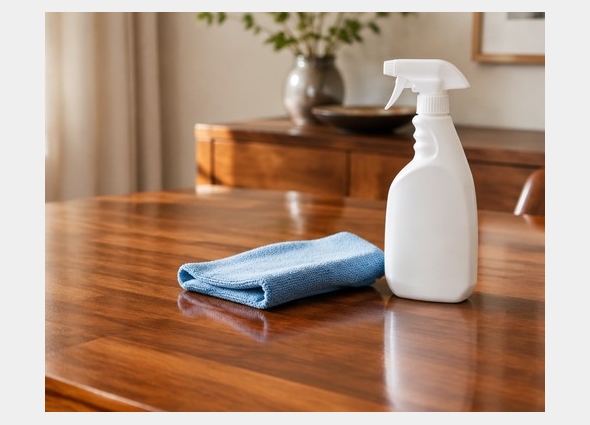
Types of Wood Furniture Polish: Spray, Cream, Wax and Oil, and How to Choose
Walk down the furniture-care aisle and you will find sprays, creams, waxes and oils all sold as wood polish, and they do not do the same job. Use the wrong one and you can leave a sticky film, dull the surface or fail to protect it at all. The good news is that the choice is simpler than the shelf makes it look. It almost always comes down to the finish on your furniture.
Start with the finish, not the product
Most wood furniture is either sealed or oiled, and that one fact decides what to use. Sealed or lacquered wood has a hard, slightly glossy layer on top; water beads on it and the surface feels smooth. This covers most modern tables, cabinets and cupboards. Oiled or bare wood feels more natural and matt, and water soaks in rather than beading. If you are not sure, put a drop of water on a hidden spot: if it sits on top, the wood is sealed; if it darkens and soaks in, the wood is oiled or bare.
Sealed and lacquered wood: spray or cream
On sealed furniture you are cleaning and shining the finish, not feeding the wood, so a surface polish is what you want. A spray polish is the quickest choice for everyday care, lifting dust and smudges and leaving a clean shine in one wipe. Reach for a cream polish when a piece needs more, since it has extra body, evens out a tired finish and can mask very fine scratches as you buff it in. Both sit on the finish, so they suit weekly upkeep rather than restoration. Keep oils off sealed wood, because they cannot soak through the seal and will only sit on top.
Oiled or bare wood: an oil finish
Oiled and untreated wood is the opposite case. Here you want to feed the wood, not coat it, so a penetrating oil such as teak, tung or linseed is the right tool. The oil soaks into the grain, nourishes it and protects it against drying and everyday moisture. Oiled furniture is topped up from time to time as the wood dries, rather than polished every week.
Wax, when you want more protection
Wax sits between the two. A paste or solid wax, often beeswax or carnauba, builds a thin protective layer that adds depth and a soft sheen and helps the surface shrug off moisture and marks. It takes more effort than a spray and is a now-and-then treatment rather than a routine one, because the layer lasts and extra coats can build up. Think of it as an occasional protective step on top of regular cleaning.
Applying it without leaving a film
Whatever you use, the method is much the same, and the most common mistake is using too much. Dust first so you do not grind grit into the finish, then clean off any smudges so the polish goes onto a clean surface. On antique or delicate pieces, test on a hidden area before you start. Apply a thin, even coat along the grain, then buff with a soft lint-free cloth such as a microfibre. More product does not mean more shine, it just leaves a film.
One box for routine wood care
If you would rather not buy each product on its own, a care kit gathers the day-to-day essentials together. The Vetro Power Solid Wood Care Kit holds a wood polish furniture spray and an all purpose cleaner for routine care, two wax touch-up crayons and a scraper for small marks, and a microfibre cloth and cleaning wipes, in a printed inner and outer box. It is made to clean, polish and touch up solid wood furniture, tables, chairs, cabinets and other wooden surfaces, which covers most of what a sealed-wood piece needs from one week to the next.
Frequently asked questions
What is the difference between wood polish and wood wax?
Polish, usually a spray or cream, mainly cleans and adds shine and sits on the surface. Wax builds a thin protective layer that adds depth and helps resist moisture, and is applied far less often. Many people use a polish for weekly care and a wax now and then for protection.
Can I use furniture polish on a lacquered or sealed table?
Yes. Spray and cream polishes are made for sealed and lacquered surfaces and give routine shine. Avoid penetrating oils on sealed wood, because the oil cannot soak in and will sit on top.
Do I need oil or polish for teak furniture?
It depends on the finish. Oiled or untreated teak is fed with teak or another penetrating oil. Sealed or lacquered teak is kept up with a spray or cream polish instead.
For a single box that covers routine cleaning, shine and small touch-ups on solid wood furniture, see the Vetro Power Solid Wood Care Kit and the full Care Kits range. To discuss supply or a private-label kit under your own brand, reach out to us.
Related Products
Vetro Power Solid Wood Care Kit
A retail-ready solid wood furniture care kit, supplied complete in a printed inner and outer box under your own brand.
Learn More