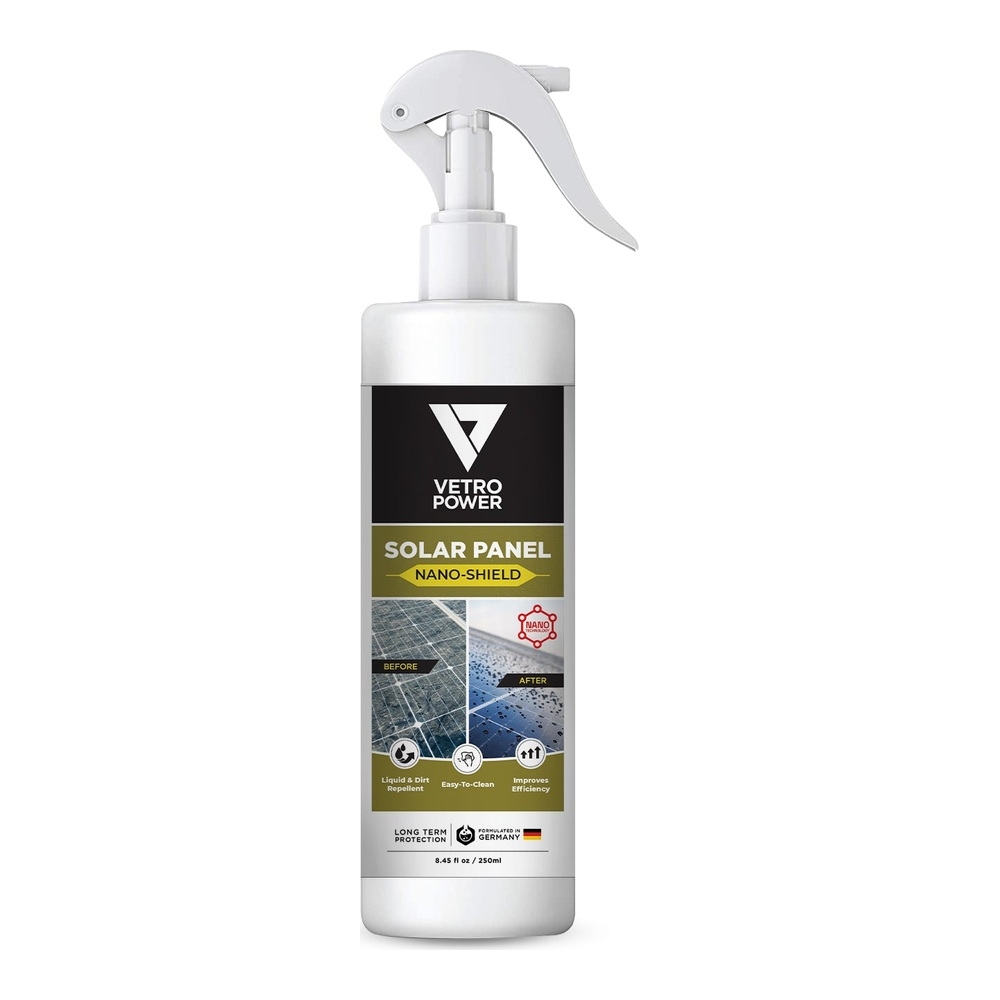
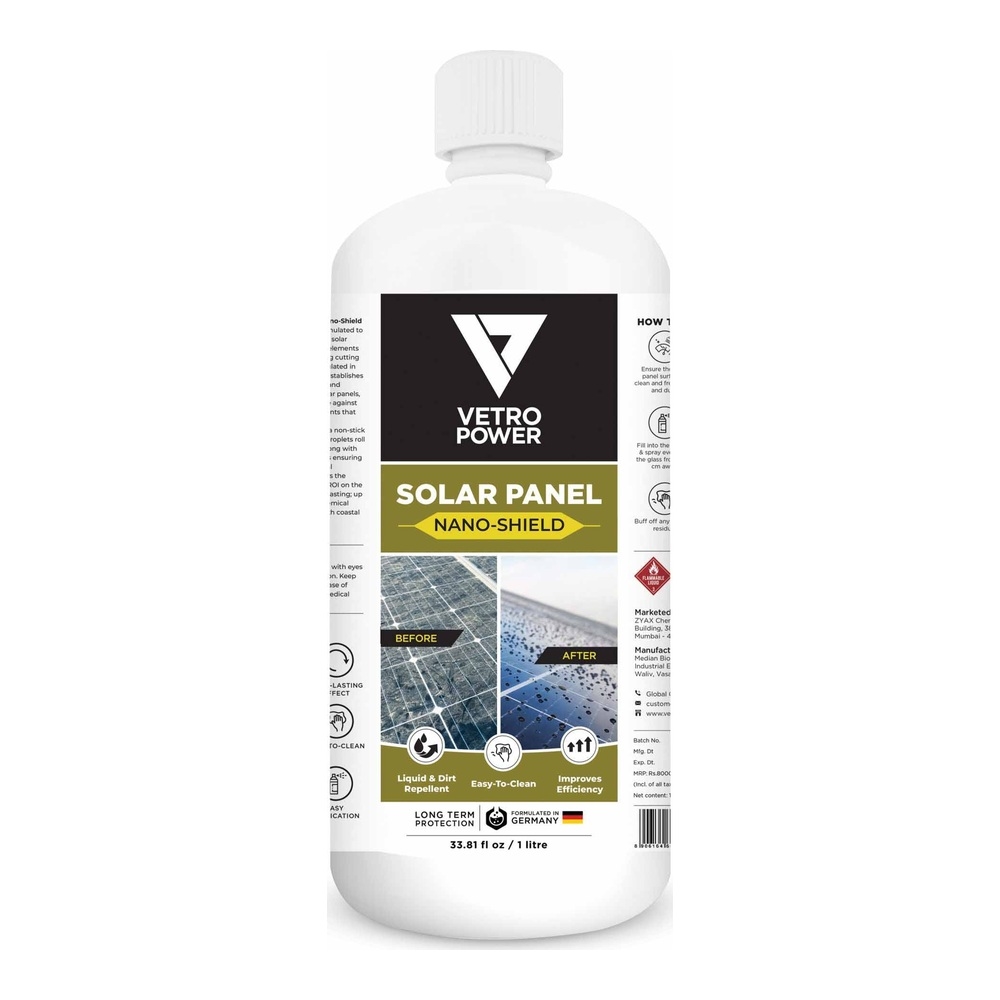
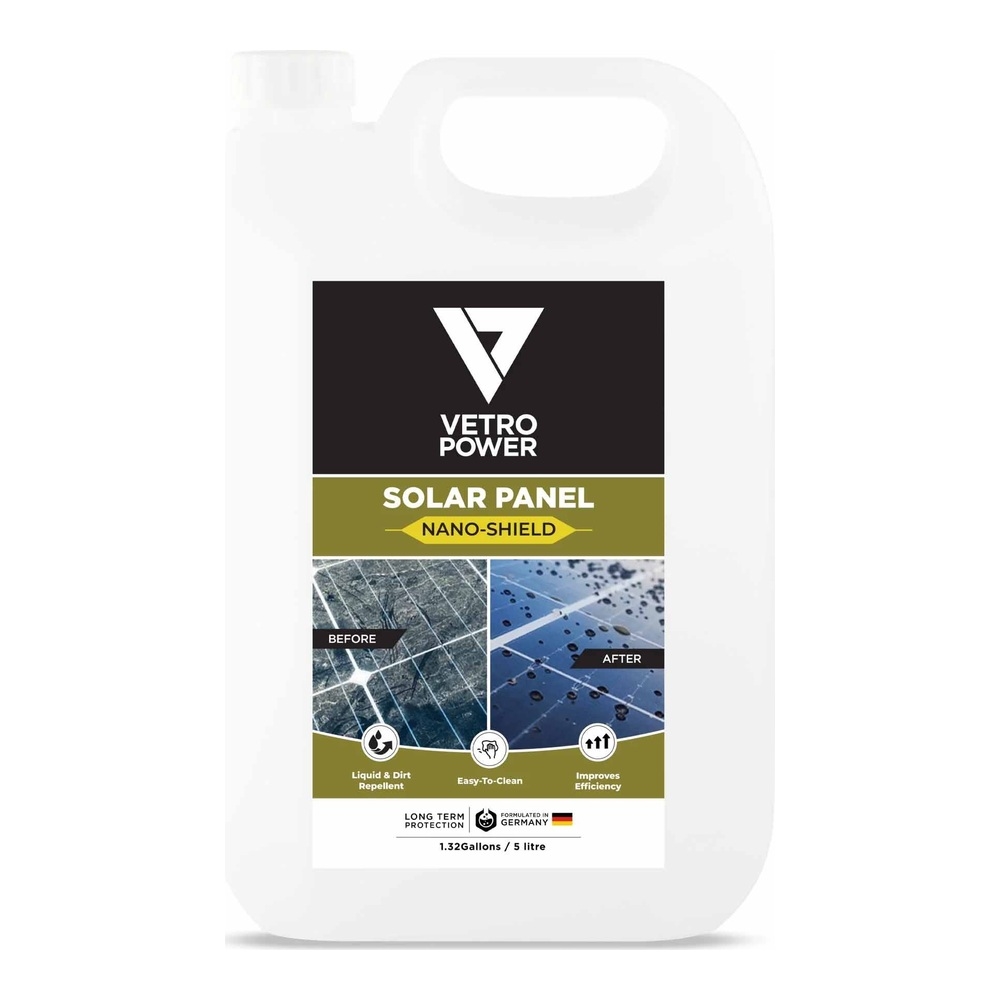
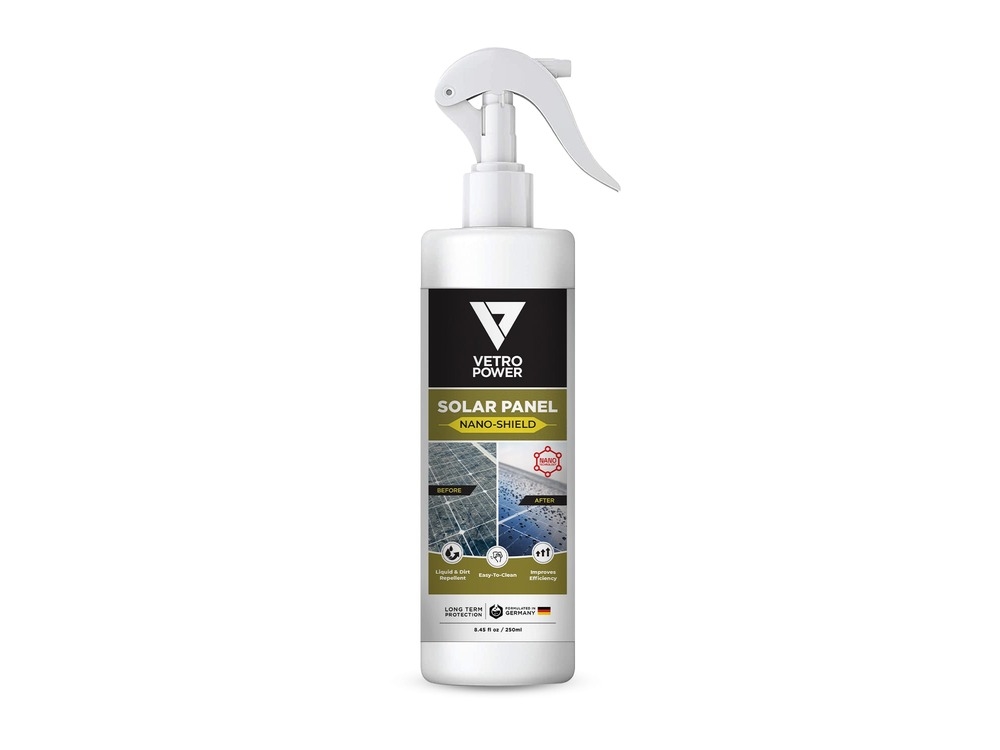
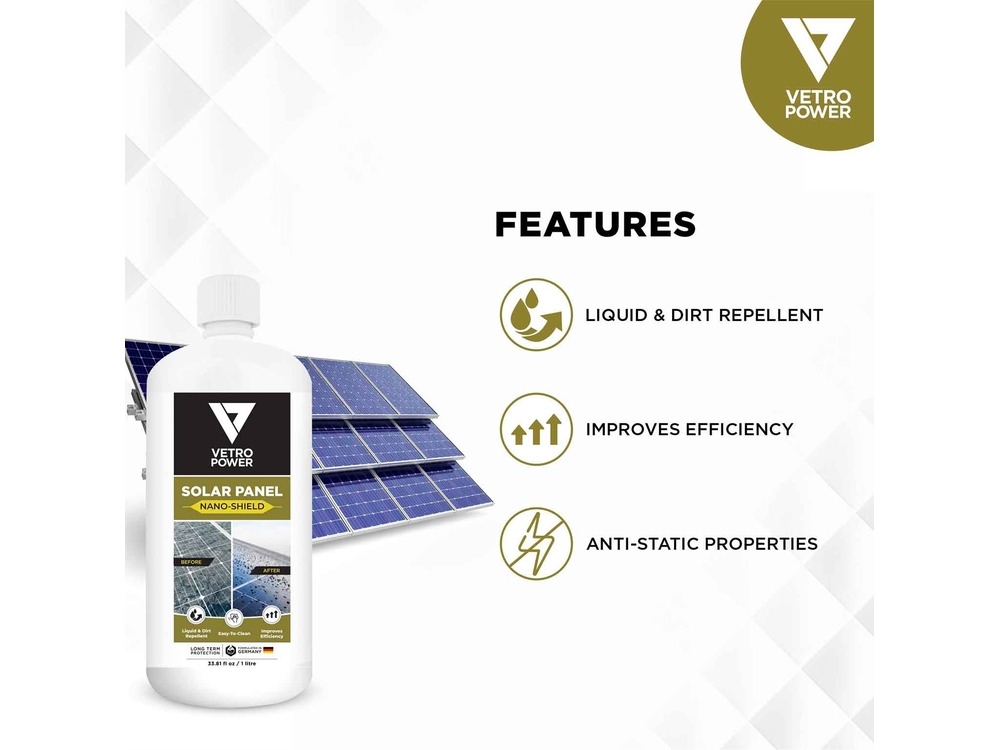
Vetro Power Solar Panel Nano-Shield
Nano Coating For Solar Panels
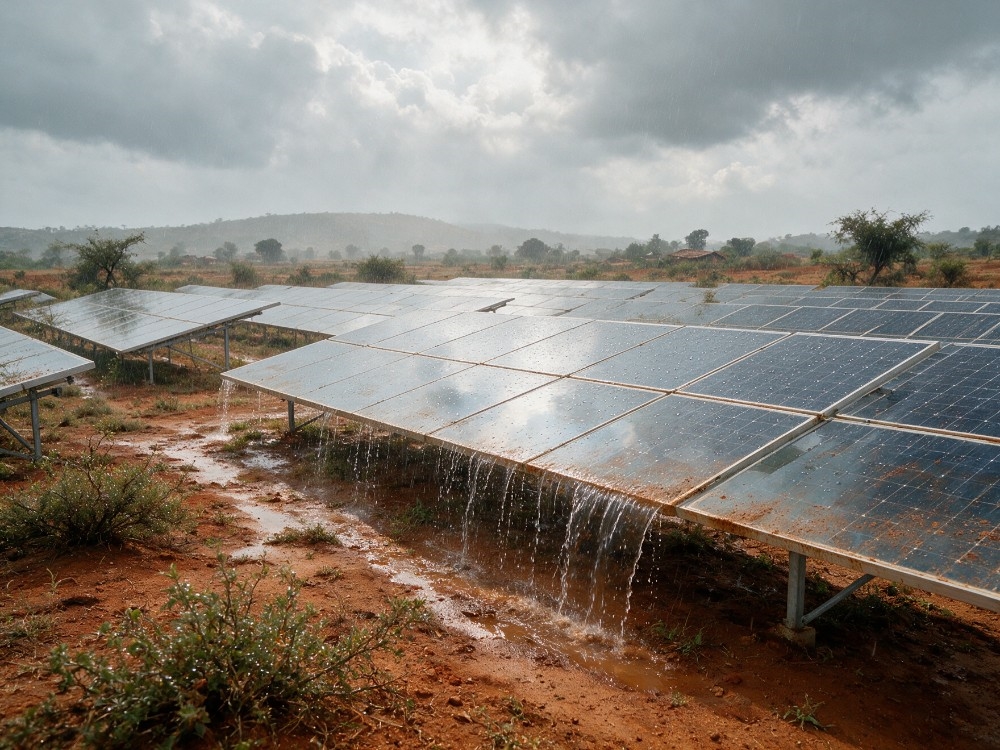
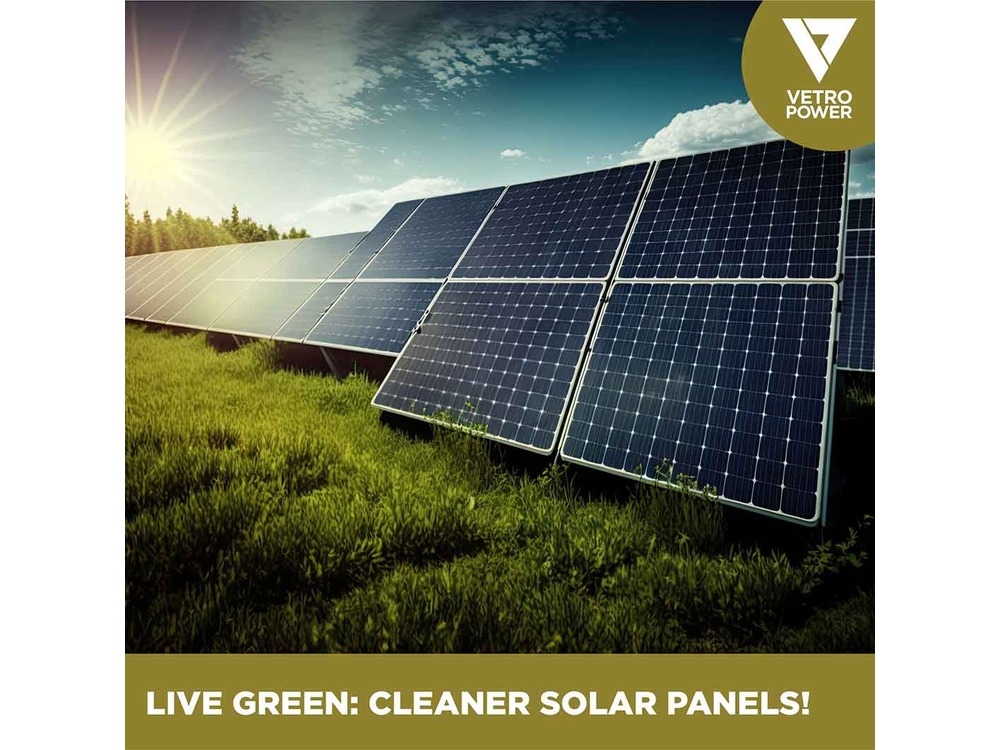
Anti-soiling liquid glass coating for photovoltaic module glass. Hydrophobic, oleophobic and UV-stable; rain keeps the panel clean.
Benefits
- Easy-to-clean, soil-repellent layer: dirt and water do not adhere to the glass
- Hydrophobic and oleophobic
- No change in look and feel; transmission of the module glass not reduced, increased values measured
- UV-stable: water-repellent effect retained after 3500 h UV weathering
- Resists commercial cleaners pH 2 to 12 and pressure washers up to 60 bar
- High abrasion resistance: contact angle kept over 5000 cleaning cycles
- Reduces cleaning frequency, water use and cleaning agents
- Passive protection of module, silicone seals and frame against microorganisms, without biocides
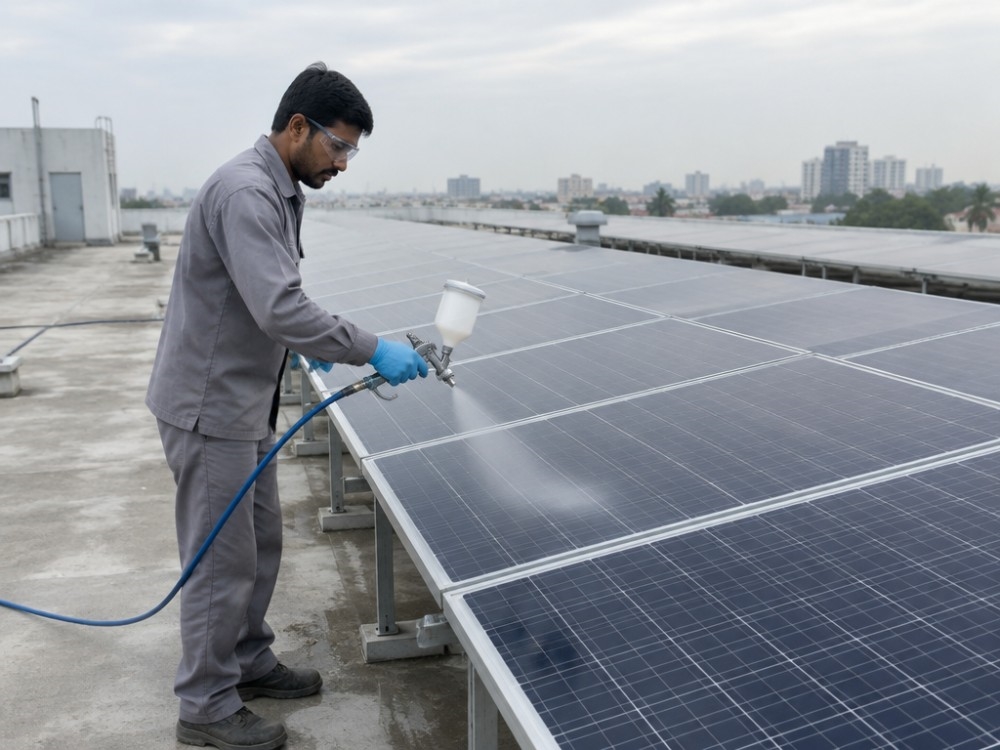
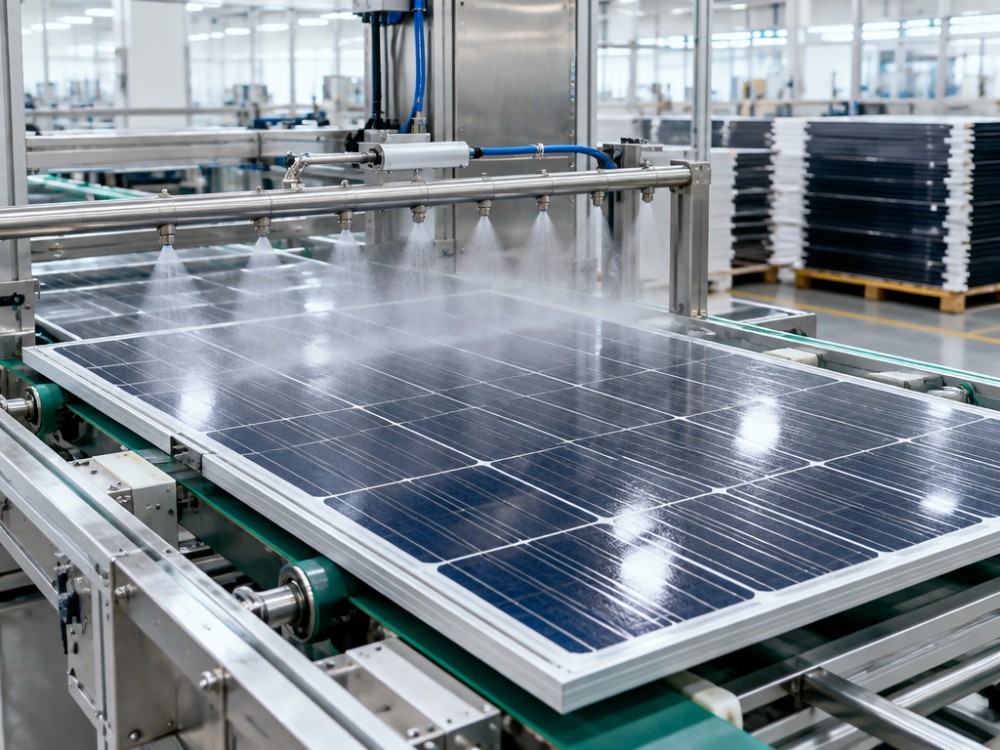
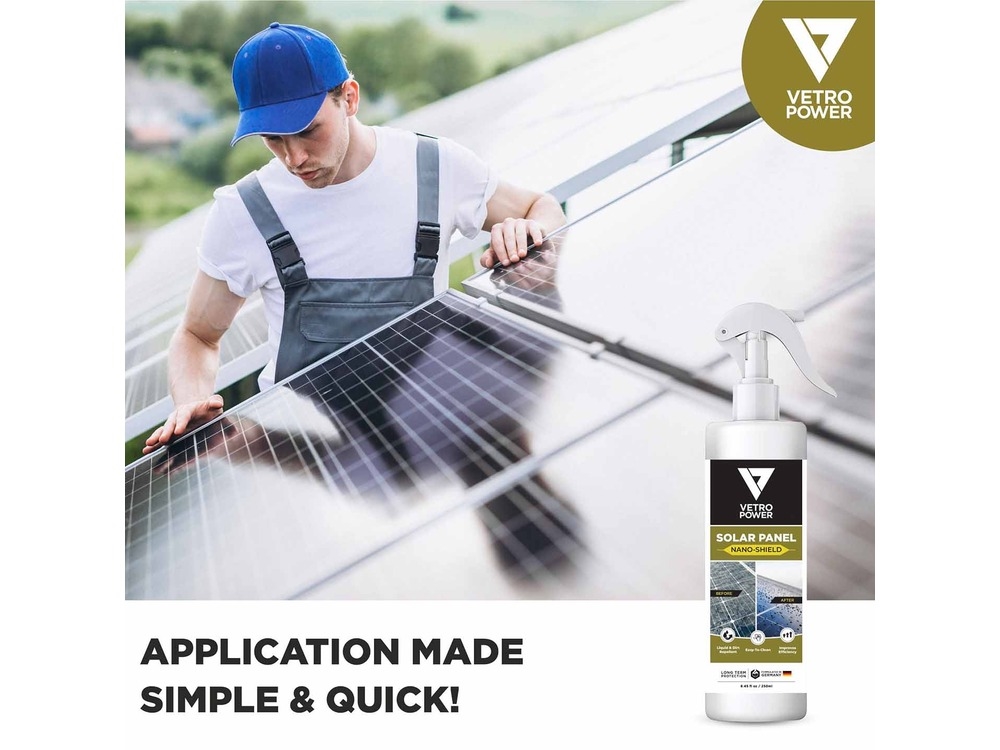
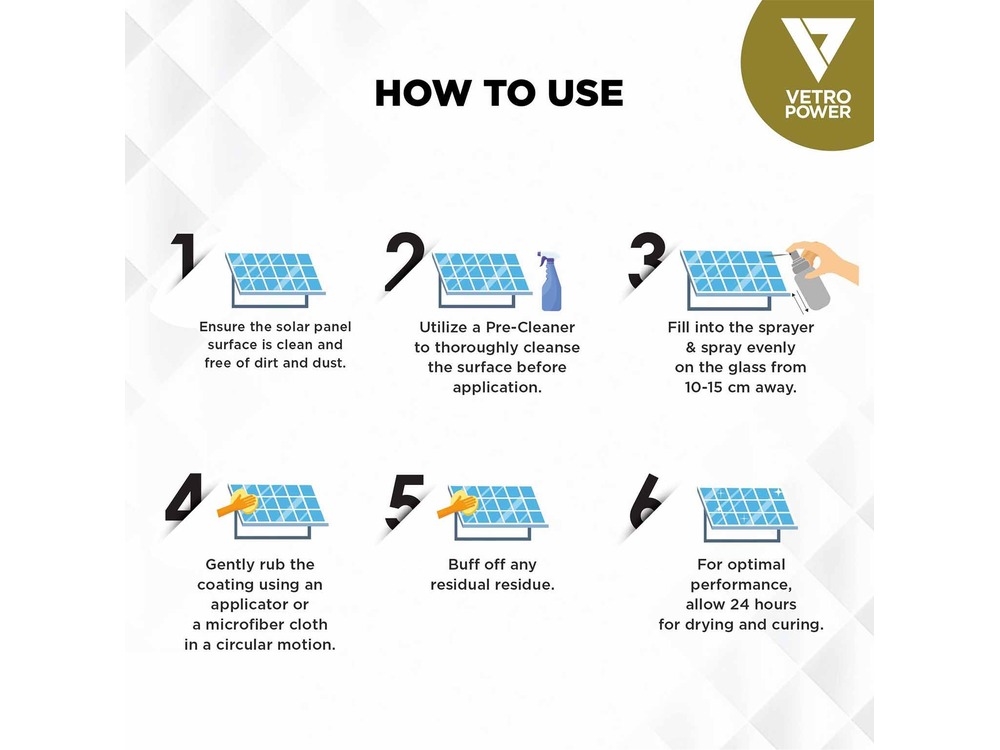
- Applied on installed panels or in the module factory; ready to use, spray application
- Food-safe and physiologically harmless (EU 1935/2004), biocompatible, ecologically sound

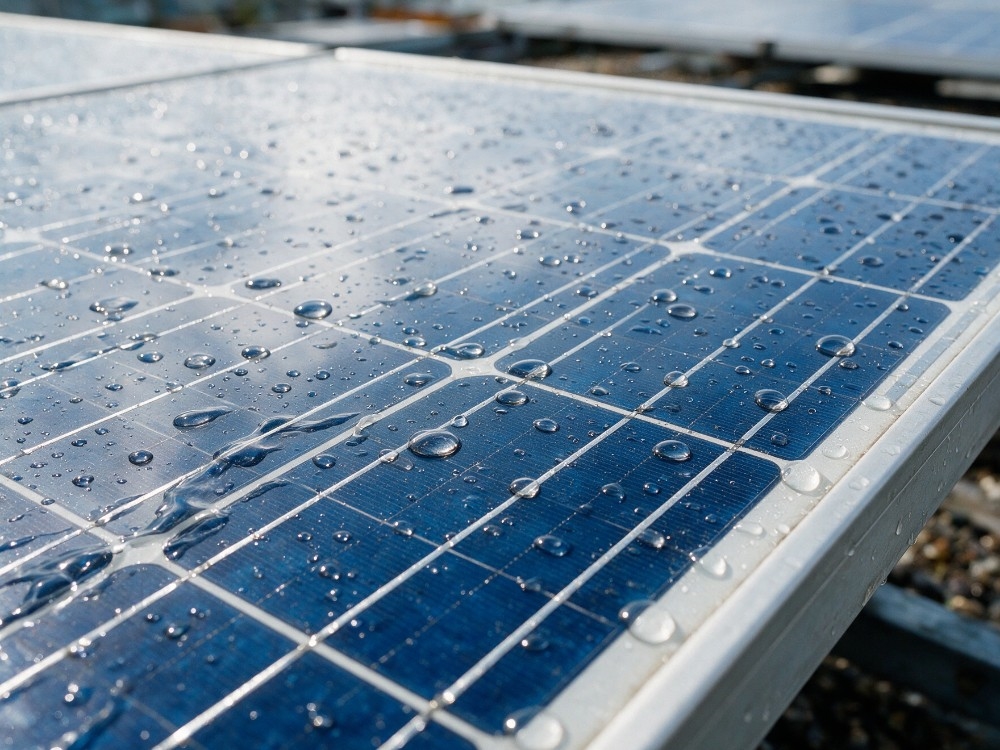
Performance & Testing
- Weather test: significant hydrophobicity after 3500 h UV exposure
- Chemical resistance: commercial cleaners in the pH 2 to 12 range
- Abrasion: contact angle compared with three other coating products over 5000 cleaning cycles
- Transmission measurement on PV module glass: not reduced; increased transmission at the coated sample
- Expert evaluation on PV modules: UV-stable film, less dirt adhesion, removal by rain, passive protection against microorganisms without biocides
- Facade reference: cleaning four times a year no longer necessary after coating; effect unchanged after one year
- Temperature resistance up to 450 °C peak; pressure and vapour cleaners up to 60 bar
Specifications
| Density (g/ml) | 0.8 |
| Flash Point (°C) | 12 |
| Boiling Point (°C) | approx. 80 |
| Colour | Colourless |
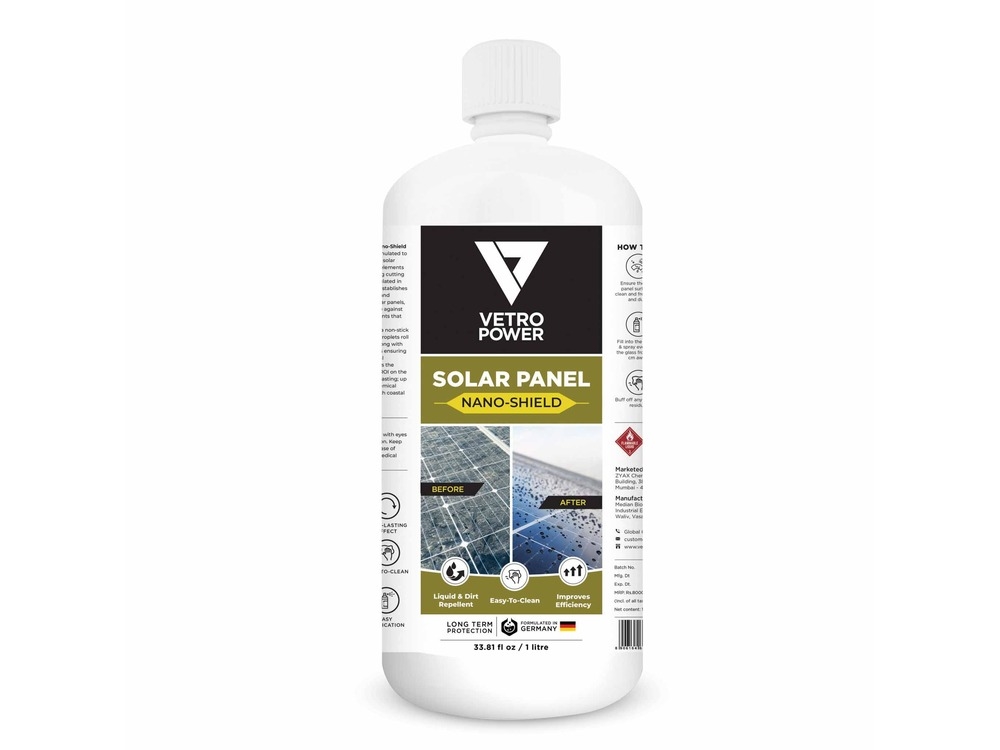
Vetro Power Solar Panel Nano-Shield is a ready-to-use hydrophobic and oleophobic liquid-glass nano coating for photovoltaic module glass. Dirt and water bead up and run off, keeping panels cleaner between washes. One litre covers 75 to 93 m² (800 to 1,000 sq ft). It holds its water repellency after 3,500 hours of UV exposure and 5,000 cleaning cycles, touch-dries in minutes, and reaches full performance in 24 hours, with a service life of up to 5 years.
Vetro Power Solar Panel Nano-Shield is a ready-to-use liquid glass coating for the glass of photovoltaic modules. It cures to an ultra-thin, invisible layer that stops dirt and water sticking to the glass, so rain carries dust, pollen and bird droppings off the surface instead of leaving streaks and residue. The result is a panel that stays cleaner between washes, needs considerably less water and cleaning agent, and keeps its light transmission. It is applied by spray to modules already installed on a roof or in a plant, or in the module factory before dispatch.
The coating is silicon dioxide (SiO2) based and solvent-borne. It does not change the look or feel of the glass, it is UV-stable, and it is resistant to cleaning agents in the pH 2 to 12 range and to pressure washers up to 60 bar. It is the same easy-to-clean glass technology used on glass facades, applied to the surface where dirt costs the most: the front of a solar panel.
How the coating works
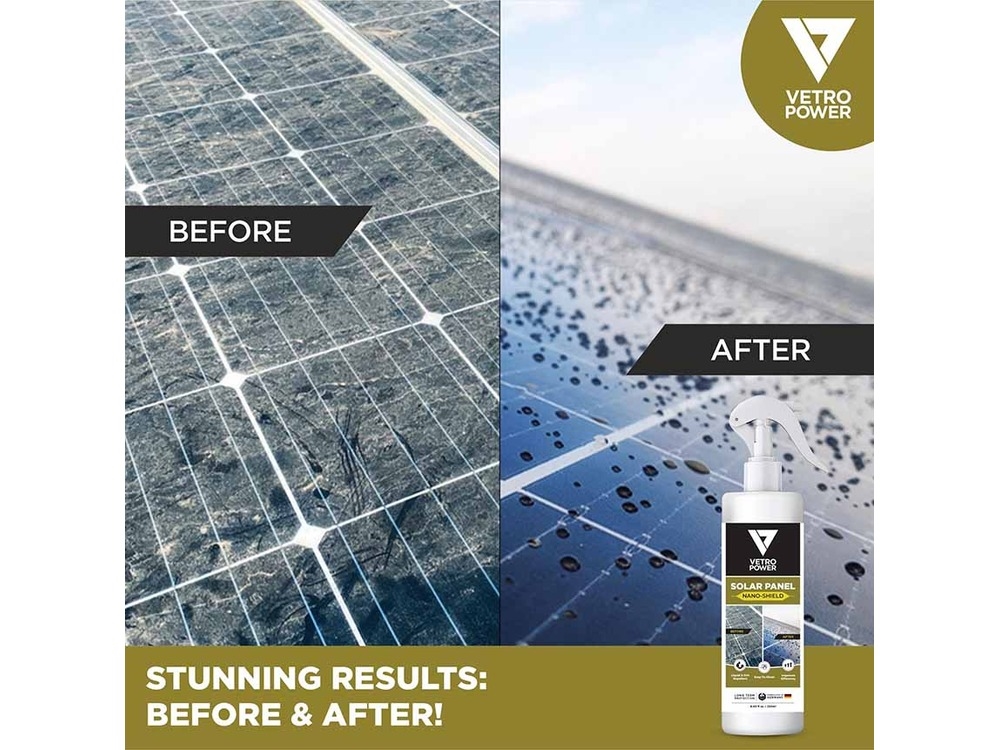
Soiling is the layer of dust, pollen, soot and bird droppings that builds up on the glass of a solar panel and blocks light from reaching the cells. On an uncoated panel this layer bonds to the glass and has to be washed off. The coating changes the surface so the layer cannot bond.
On a PV module the layer is applied over the whole front face: the glass, the silicone sealing in which the module is embedded, and the metal frame. The expert evaluation of the coating on PV modules describes this as a passive protection that significantly reduces the adhesion of microorganisms without the use of biocides.
A coating instead of more cleaning
Panels are cleaned because soiling costs output: soiling can cut the output of a dirty panel by over 30%. A cleaning contract, a brush and pole, a water-fed system or a robot all remove the layer after it has formed. The coating stops the layer forming in the first place, so the same panel needs washing far less often, and the need for cleaning agents and water is considerably reduced. The table sets out what changes, taken from the results on a coated three-storey glass facade and from the coating tests.
| Cleaning only | With Vetro Power Solar Panel Nano-Shield | |
|---|---|---|
| Dirt after rain | Dust, dirt and pollen seize on the glass and dry as streaks and residue | Washed away by the rain, no streaks or residue on the glass |
| Cleaning frequency | Facade in the reference case was cleaned four times a year | After coating, cleaning of the facade was not necessary; the effect was unchanged after one year |
| Cleaning agents | Detergents or chemical cleaners | Need for cleaning agents considerably reduced; the layer resists commercial cleaners of pH 2 to 12 |
| Water use | Every wash | Considerably reduced, together with the need for cleaning agents |
| Access | Climbers, scaffolds or platforms at every clean | Only at the reduced cleaning interval |
| Disturbance | Staff and site disturbed at every clean | No longer disturbed by cleaning |
| Pressure washing | As per panel manufacturer | Layer withstands high-pressure and vapour cleaners up to 60 bar, depending on the substrate |
| Effect over time | None | Water-repellent effect retained after 3500 h UV weathering and 5000 cleaning cycles |
What the tests show
Contact angle is the standard measure of how strongly a surface repels water: the higher the angle, the more the water beads up and runs off. In the abrasion comparison the coating was measured against three other coating products over 0, 500, 1000, 2000 and 5000 cleaning cycles and kept the highest contact angle throughout.
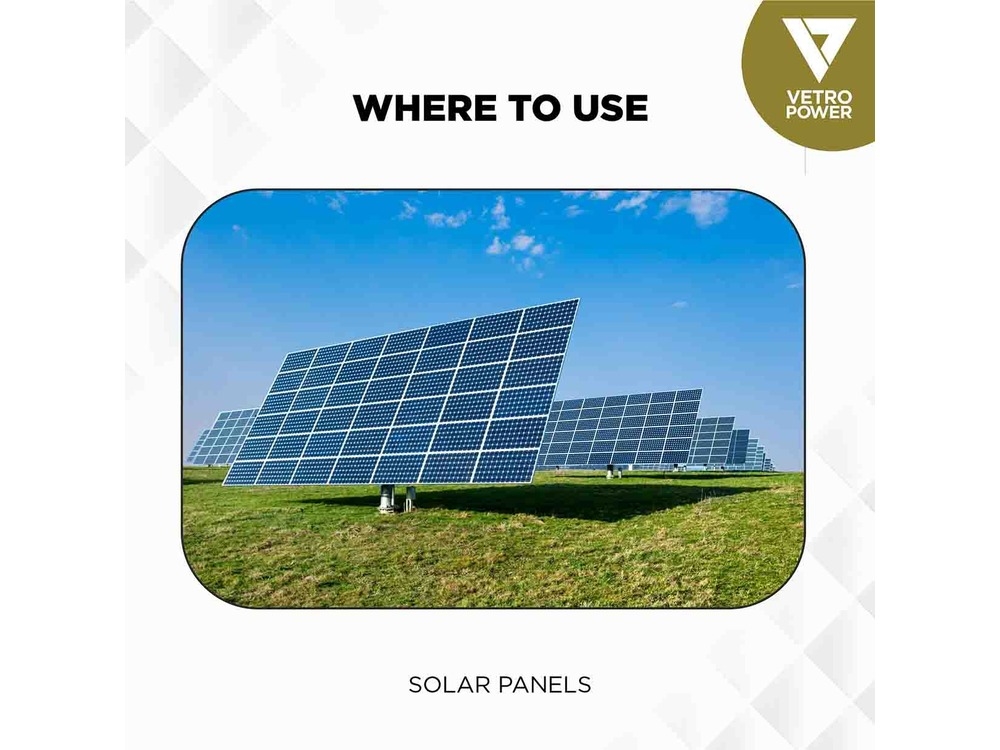
Where it is used
Application
Application conditions
Apply at 5 to 35 °C and 90% relative humidity or less, in the shade, on a dry, wind-free day. Do not apply in wet conditions or when rain is expected within 24 hours. The film is touch dry in a few minutes; keep the panel dry and untouched for the first hour, and the coating reaches full performance after 24 hours. In the monsoon this means applying in a dry window and keeping the panel rain-free for a day.
Coverage on glass is about 800 to 1,000 sq ft (75 to 93 m²) per litre.
Coverage and packaging
| Pack | Coverage on glass | Typical use |
|---|---|---|
| 250 ml | 200 to 250 sq ft (19 to 23 m²) | Home rooftop systems and trials |
| 1 L | 800 to 1,000 sq ft (75 to 93 m²) | Rooftop systems and small commercial arrays |
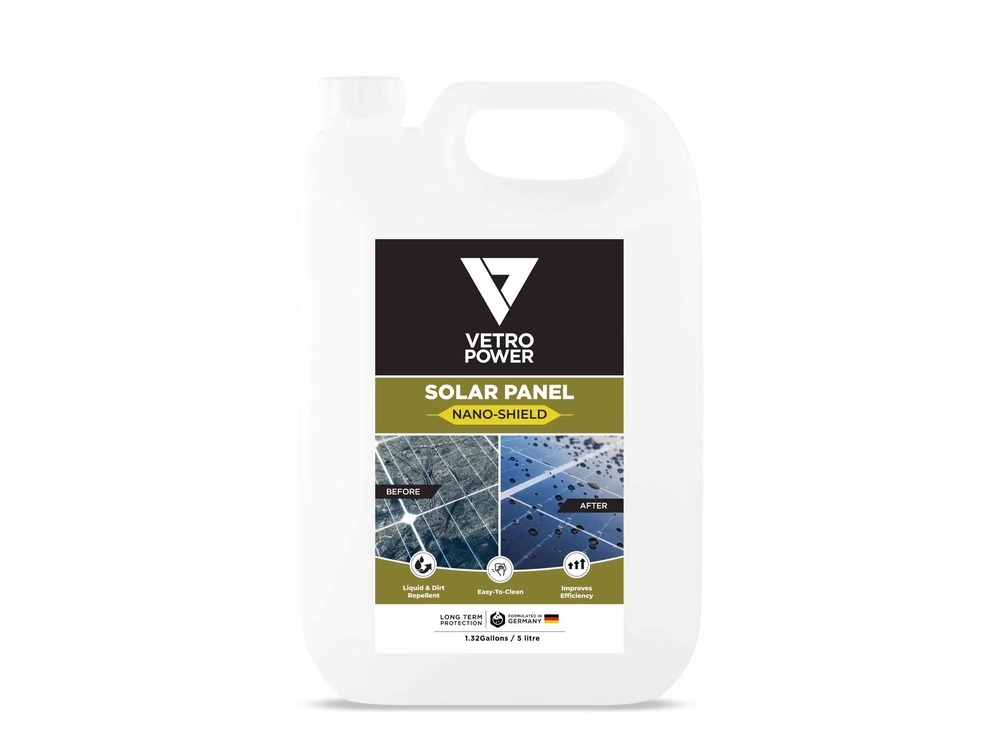
| 5 L | 4,000 to 5,000 sq ft (375 to 465 m²) | Commercial roofs and O&M contractors |
| Bulk drums and IBC | On request | Utility-scale plants and module factories |
Coverage is at 800 to 1,000 sq ft per litre; allow extra for spray loss. Private label and OEM supply are available for solar O&M companies and module manufacturers.
Technical data
| Property | Value |
|---|---|
| Technology | Silicon dioxide (SiO2) liquid glass, solvent-borne, ready to use |
| Appearance | Colourless liquid, alcohol odour; cured layer invisible, no change in look and feel |
| Density | 0.8 g/cm³ |
| Viscosity | about 1.2 mPas |
| Flash point | below 15 °C (12 °C on the safety data sheet); highly flammable liquid and vapour |
| Boiling point | about 80 °C |
| Coverage | 800 to 1,000 sq ft (75 to 93 m²) per litre |
| Surface properties | Hydrophobic, oleophobic, soil-repellent, non-stick |
| UV weathering | Hydrophobicity retained after 3500 h UV exposure |
| Chemical resistance | Commercial cleaners pH 2 to 12; compatible with disinfectants |
| Abrasion | Higher contact angle than comparison coatings after 5000 cleaning cycles |
| Pressure cleaning | High-pressure and vapour cleaners up to 60 bar, depending on the substrate |
| Temperature resistance | Up to 450 °C peak temperature |
| Food safety | Food-safe, physiologically harmless (EU regulation 1935/2004), biocompatible |
| Application | Spray, HVLP nozzles; industrial spray equipment |
| Application conditions | 5 to 35 °C, relative humidity 90% or less, dry weather, no rain expected within 24 hours |
| Drying | Touch dry in a few minutes; keep dry and untouched for 1 hour; full performance after 24 hours |
| Service life | Up to 5 years in ideal conditions on unweathered panels; 3 to 4 years in windy, dusty or coastal locations. Surfactant cleaners and mechanical abrasion shorten the life of the layer. |
Care of coated panels
Rain does most of the work on a coated panel. When a wash is needed, a soft brush or water-fed pole are enough, and a pressure washer up to 60 bar can be used, depending on the substrate. Cleaners in the pH 2 to 12 range do not harm the layer.
Storage, handling and safety
Highly flammable liquid and vapour, flash point 12 °C. Keep away from heat, hot surfaces, sparks, open flames and other ignition sources; no smoking; use only non-sparking tools. Ground and bond the container and receiving equipment and take precautions against static discharge. Use only outdoors or in a well-ventilated area, avoid breathing the spray and the vapour, and avoid contact with skin and eyes; the liquid causes serious eye irritation and its vapour may cause drowsiness or dizziness. Wear protective gloves, eye protection and, when spraying, respiratory protection.
Store in a well-ventilated place, cool, with the container tightly closed, away from oxidising agents, heat, frost and sunlight. Do not eat, drink or smoke when using the product and wash hands after handling. The safety data sheet is linked below.
Limitations
- A surface coating on the glass: it reduces soiling and the cleaning needed, it does not remove a layer of dirt already bonded to the glass, so panels are cleaned before coating.
- Performance depends on preparation. Grease, residues of cleaning agents or moisture on the glass at the time of application shorten the life of the effect.
- Test an inconspicuous area on each panel type before full application.
- Drying time varies with temperature and humidity; coverage varies with the substrate and the application method.
- Highly flammable during application; follow the safety data sheet.
Frequently asked questions
Open or Close How often do solar panels need cleaning after a nano coating?
Open or Close Does a solar panel coating reduce power output or light transmission?
Open or Close What is a hydrophobic nano coating for solar panels?
Open or Close Can an anti-soiling coating be applied to solar panels that are already installed?
Open or Close Is Vetro Power Solar Panel Nano-Shield a self-cleaning solar panel coating?
Open or Close How is a nano coating applied to solar panels?
Open or Close How much area does one litre of solar panel coating cover?
Open or Close Will pressure washing or solar panel cleaning chemicals damage the coating?
Open or Close Does the solar panel coating protect the frame and seals as well as the glass?
Open or Close Is the solar panel coating safe to handle?
Open or Close Can a solar panel coating be applied during the monsoon?
Open or Close How long does a nano coating last on solar panels?
Packaging