Vetro Power Glass and Ceramic Protect

Hydrophobic Nano Coating for Glass, Facades and Ceramic Surfaces
Ready-to-use silicon dioxide sol-gel coating for glass and ceramic surfaces, also available as a concentrate for volume users. Hydrophobic and oleophobic, food-safe, UV-stable, no change in look or feel, PFOA-free and PFAS-free.
|
|
| Density (g/ml) | 0.8 g/cm³ |
| Flash Point (°C) | below 15 °C |
| Boiling Point (°C) | approx. 80 °C |
| Shelf Life | 2 years unopened, 6 months once opened |
|
Vetro Power Glass & Ceramic Protect is a hydrophobic nano coating for glass, facades and ceramic surfaces. Water beads and runs off, carrying dirt with it, so glass stays clearer for longer and is easier to clean. Independent test certificates record a water contact angle of 116.7° on coated glass, hydrophobicity retained after 3,500 hours of UV weathering (ISO 11507) and 3,000 wet-scrub cycles (ISO 11998), temperature resistance to 450 °C peak, and chemical resistance from pH 2.5 to 12. It is food-contact certified (LFGB, Regulation (EC) 1935/2004) and leaves glass strength and optical clarity unchanged. How Vetro Power Glass & Ceramic Protect comparesFigures for Vetro Power are from independent test certificates issued for the coating. Figures in the second column are from the manufacturer's published technical table for a leading glass and ceramic nano coating sold for the same uses.
Vetro Power figures: test certificates from Polymer Service GmbH Merseburg, Friedmann & Kirchner, IGR and CBA GmbH. Comparison figures: the other manufacturer's published technical specification, September 2026. Different test methods measure durability differently; both are shown as published.
Applying Vetro Power Glass & Ceramic Protect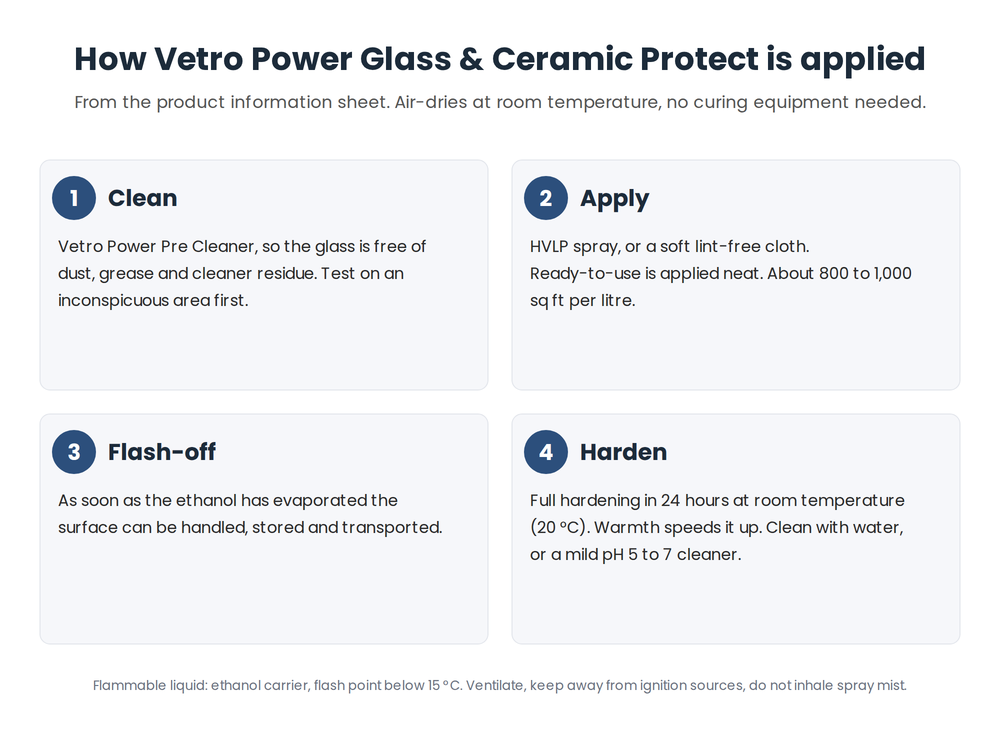 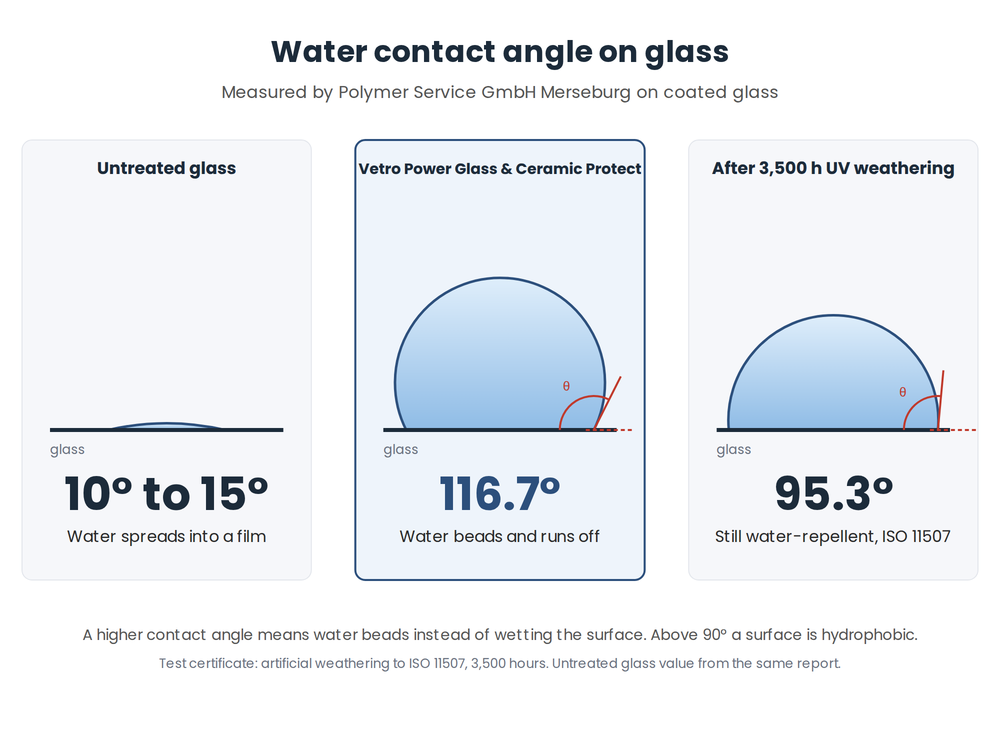 Where Vetro Power Glass & Ceramic Protect is usedThree of the surfaces the coating is specified for, with the test data that applies to each.
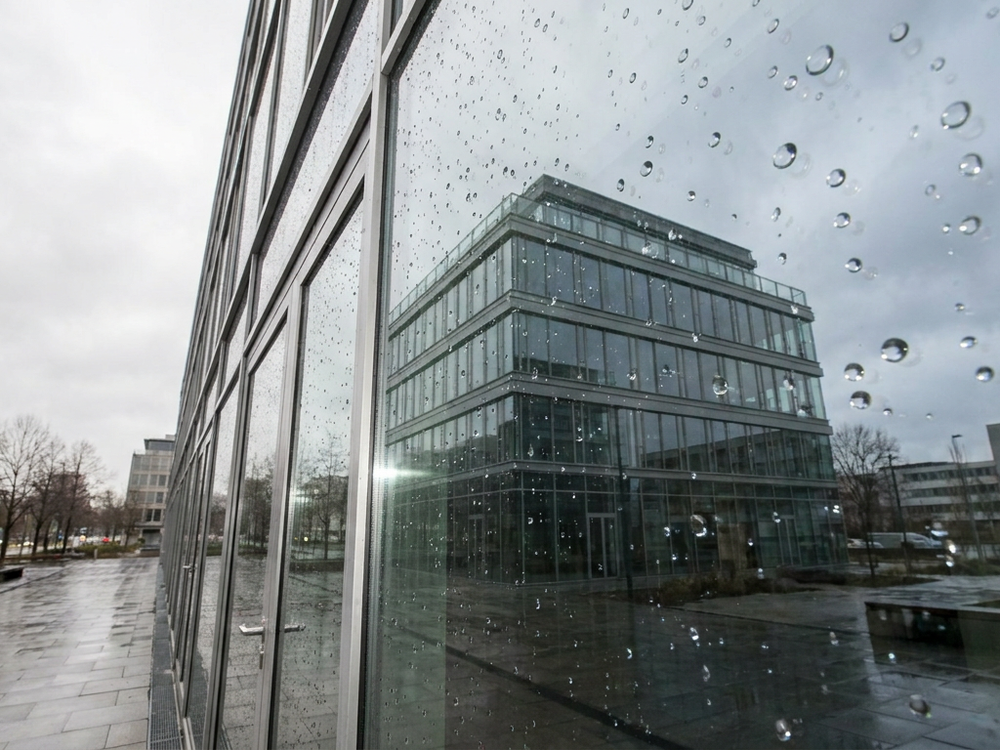
Glass facades and windowsRain beads and runs off instead of spreading, and dirt is released with water. Contact angle on coated glass 116.7°, still 95.3° after 3,500 hours of artificial UV weathering (ISO 11507). Reflection and visible light transmission of the glass are unchanged, and flexural strength to DIN EN 12150-1 is unchanged. Resistant to high-pressure and steam cleaners up to 60 bar.
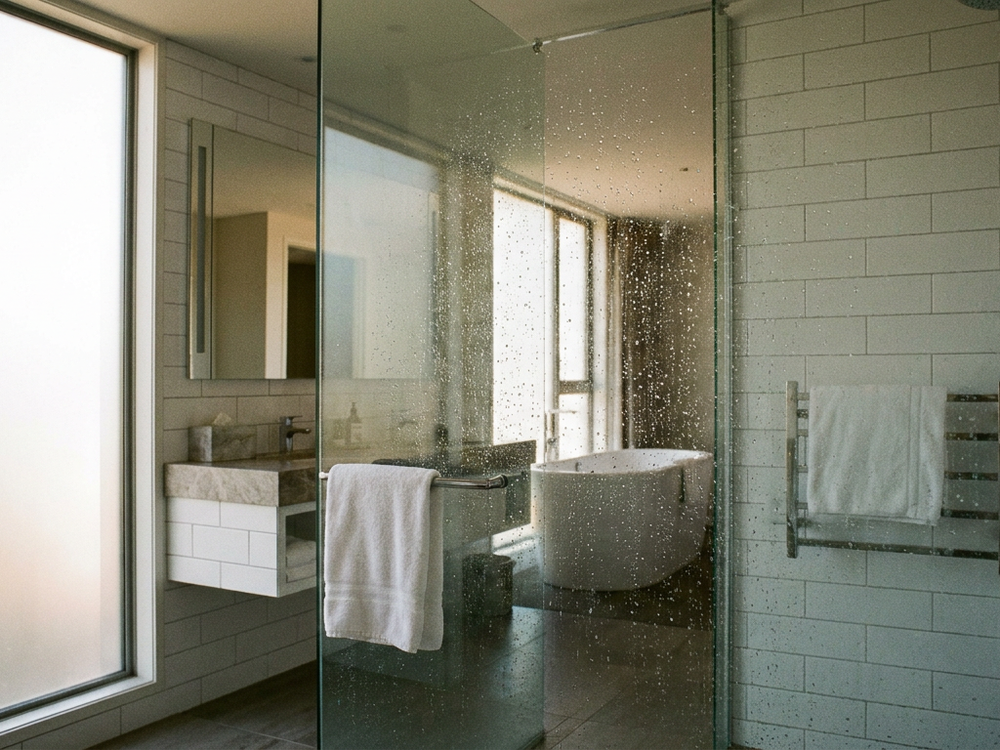
Shower screens, tiles and sanitarywareSpecified for shower screens, glazed tiles, wash basins, toilets and bathroom glass. Water and soil are repelled, so routine cleaning is with water, or water and a mild pH 5 to 7 cleaner for heavier soiling. The coating withstands chemicals from pH 2.5 to 12, and there is no change in the look or feel of the surface.

Food service, kitchens and worktopsCertified food-safe by CBA GmbH to sections 30 and 31 of the German food and feed code (LFGB) and Regulation (EC) 1935/2004, for glass guards, glazed ceramic, worktops and counters. Oil-repellent as well as water-repellent, and heat-resistant to a peak of 450 °C.
Download the Vetro Power Glass & Ceramic Protect product sheet
Everything on this page in one PDF: benefits, test results, comparison, application steps, use cases and FAQs. For customers, dealers and specifiers.
Vetro Power Glass & Ceramic Protect is a ready-to-use, ethanol-based silicon dioxide sol-gel coating for glass and ceramic surfaces in industry and trade: windows, glass facades, mirrors, lenses, shower screens, glazed tiles, wash basins, worktops and winter gardens. It is also available as a concentrate for volume users. PFOA-free and PFAS-free. The questions below cover the two forms, application, durability, care and where it can be used. Related product: for cutting solar heat and UV through existing glass while keeping the glass clear, see Vetro Power Heat-Shield Glass Protect, a transparent heat reflective glass coating. For the same easy-to-clean coating on photovoltaic module glass, see Vetro Power Solar Panel Nano-Shield, our nano coating for solar panels. |